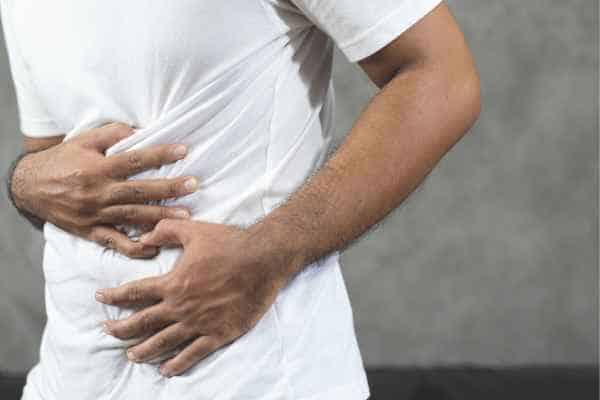
Faecal incontinence, also known as bowel incontinence, is when someone has difficulty controlling when they pass poo. It can be as mild as occasional leakage or soiling, or more severe, with little or no control over bowel movements.
It can be a distressing problem, but support and treatment options are available. Depending on the cause, appropriate treatment and management strategies may help reduce symptoms and their impact on everyday life. Whether symptoms can be completely resolved depends on the underlying cause, severity and individual circumstances.[1]
If you are experiencing new or persistent bowel leakage, it is important to speak to a GP or appropriate healthcare professional rather than assuming that weak pelvic-floor muscles are the only cause.
What causes faecal incontinence?
There is no single cause.
Faecal incontinence can be associated with weakened or damaged muscles around the anus, changes in bowel consistency, constipation, diarrhoea, irritable bowel syndrome, inflammatory bowel conditions, nerve problems, previous surgery, childbirth or other conditions affecting the bowel or pelvic floor. Several factors can sometimes occur together. [1]
This is why understanding the likely cause is an important part of deciding how faecal incontinence should be managed.
For example, someone with frequent loose stools may need a very different approach from someone whose symptoms are linked primarily to pelvic-floor weakness.
What treatments are available for faecal incontinence?
Whether faecal incontinence can be completely resolved depends on what is causing it. For some people, addressing the underlying problem may substantially reduce symptoms or, depending on the cause, resolve them. For others, treatment is mainly about reducing leakage and making bowel control easier to manage.
The NHS advises people experiencing bowel incontinence to seek medical advice because treatments are available. Assessment may involve discussing bowel habits and symptoms, an examination and, where necessary, referral for further investigations. [1] Read Our EM Chair FAQs
Possible management can include changes to diet, medication, bowel-management strategies, pelvic-floor exercises, biofeedback and specialist treatment. Surgery may be considered when other approaches have not helped, or symptoms are severe. [1][2]
The important point is that “better control” and “cure” are not necessarily the same thing.
A responsible treatment provider should explain this distinction rather than promise a particular outcome.
What does the pelvic floor have to do with bowel control?
The pelvic floor is a group of muscles and supporting tissues at the bottom of the pelvis.
These muscles work alongside the anal sphincter and other structures involved in continence. When the muscles are weak, damaged or not working in a coordinated way, bowel control can be affected.
Pelvic-floor muscle training and biofeedback are recognised approaches used to manage faecal incontinence. Evidence reviews have investigated physiotherapy-based approaches, including pelvic-floor muscle training and biofeedback, for faecal incontinence, although the evidence and appropriate programme vary between individuals. [2][3]
This is also why simply telling everyone with faecal incontinence to “strengthen their pelvic floor” is not enough. A proper assessment matters.

What is EM Chair treatment?
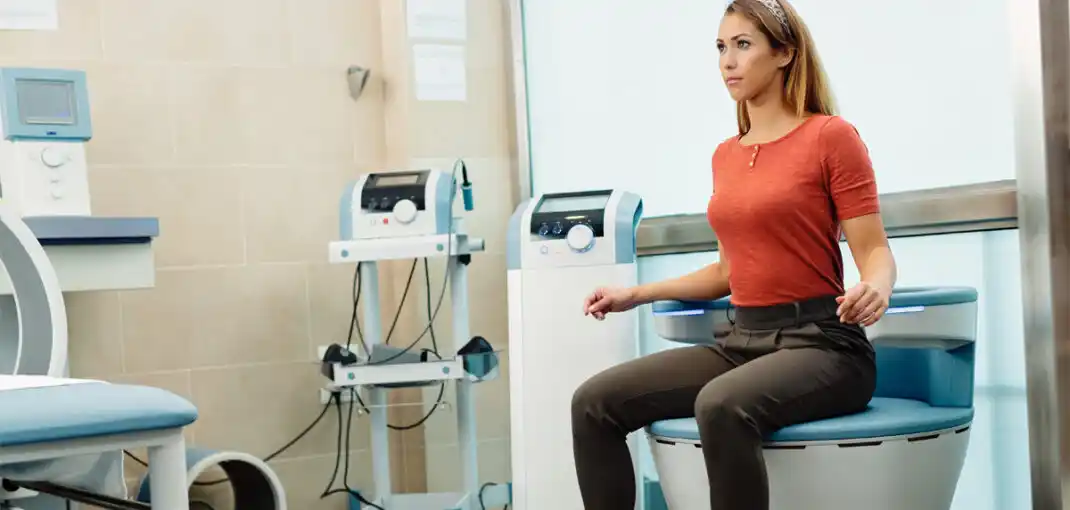
An EM Chair Oxfordshire is a chair-based system that uses electromagnetic stimulation to produce repeated contractions of the pelvic-floor muscles while the person remains clothed.
The sensation is generally described as repeated muscle contractions rather than conventional exercise.
The technology is designed to stimulate the pelvic-floor muscles without requiring the person to perform each contraction themselves.
However, it is important to distinguish between how a device works and how well it has been proven to treat a particular medical condition.
Research has investigated pelvic-floor stimulation in relation to certain pelvic-floor and continence conditions. However, evidence specifically establishing EM Chair treatment as an effective treatment or cure for faecal incontinence is currently limited. A ClinicalTrials.gov study investigating BTL Emsella for faecal incontinence was registered but subsequently withdrawn. [4]
For that reason, EM Chair treatment should not be described as a proven or guaranteed cure for faecal incontinence.
What is known about pelvic-floor electromagnetic stimulation?
It is an area that has been investigated, but evidence specifically supporting EM Chair treatment for faecal incontinence remains limited.
Research has investigated pelvic-floor rehabilitation and stimulation approaches in relation to incontinence, but the evidence varies according to the condition, treatment method, device, treatment protocol and patient group studied. [3]
Evidence relating to urinary incontinence should also not automatically be presented as evidence for faecal incontinence. They are different conditions, even though both can involve pelvic-floor function. Learn more about how urinary and faecal incontinence differ
If you’re looking into EM Chair Oxfordshire because you’re having problems with bowel leakage, it’s worth finding out what’s causing it first. The treatment may not be right for everyone, so speak to your GP if you’re unsure about your symptoms.
What happens during an EM Chair session?
For chair-based electromagnetic pelvic-floor treatment, the person normally sits on the treatment chair while fully clothed.
You’ll feel the pelvic-floor muscles working during the session as the device makes them contract. The feeling can be a little unusual at first, especially if you’ve never had this type of treatment before. The intensity can be changed during the session to a level that feels comfortable for you.
If treatment is considered appropriate, the recommended schedule should be based on the individual and the specific treatment protocol.
Who may not be suitable for electromagnetic stimulation?
Suitability should be assessed before treatment.
This treatment won’t be right for everyone. The precautions can also vary depending on the device being used, so your practitioner should check the manufacturer’s guidance and your individual circumstances before treatment.
Do not rely on a general online article to decide whether treatment is safe for you.
If you have unexplained bowel symptoms, blood in your stool, persistent changes in bowel habit, significant pain or newly developed incontinence, medical assessment should come first. The NHS specifically advises urgent assessment for symptoms such as black or dark-red poo or bloody diarrhoea. [1]
What can treatment and management realistically achieve?
Where treatment is appropriate, the aim of management is generally to improve bowel control and reduce the impact of symptoms. Outcomes vary according to the underlying cause and the treatment used.
Everyone is different, so outcomes can depend on what is causing the incontinence, how severe the symptoms are and how well the pelvic-floor muscles are functioning.
Some people may benefit from pelvic-floor rehabilitation, while others may need dietary changes, medication, bowel retraining, specialist continence care or another form of treatment. [1][2]
EM Chair treatment Oxfordshire should therefore be viewed as one possible part of a wider approach rather than automatically replacing established medical care.
What should you ask before booking?
Before undergoing treatment, ask:
- Has the likely cause of my faecal incontinence been assessed?
- Is this treatment appropriate for my particular symptoms?
- What evidence supports its use for faecal incontinence?
- What results are realistic?
- How many sessions are recommended, and why?
- What are the contraindications?
- Who will assess my suitability?
- What happens if my symptoms do not improve?
- Should I also see my GP, continence specialist or pelvic-floor physiotherapist?
Before booking, make sure you can ask questions about the treatment, whether it is suitable for you and what kind of results you might realistically expect. A good provider should be open about these points and explain what the treatment can and cannot do. You can also read our information about urinary symptoms and pelvic-floor treatment.

When should you see your GP?
Do not assume faecal incontinence is simply a consequence of ageing or weak pelvic-floor muscles.
See your GP if you think you have bowel incontinence, particularly if symptoms are new, persistent or accompanied by changes in bowel habits. [1]
Your GP can help investigate possible causes and, where appropriate, refer you to specialist continence services.
A more informed approach to faecal incontinence
Faecal incontinence can make everyday life difficult, whether that means worrying about going out, avoiding social situations or constantly thinking about finding a toilet. If you are experiencing symptoms, seeking appropriate medical advice can help identify possible causes and management options.
The most appropriate approach is not necessarily the newest or most intensive treatment. It is the approach that makes sense for your symptoms, your underlying cause and your health.
If you are considering EM Chair treatment, Lipo Sculpt Oxfordshire can provide information about the treatment and explain what is known about its potential use and limitations.
The aim should be to support an informed decision with realistic expectations—not to promise a cure that cannot be guaranteed.

Frequently asked questions
Q: Is faecal incontinence permanently curable?
Sometimes, addressing the cause of the problem can help improve or even clear the symptoms. In others, ongoing management may be needed to keep leakage under control. Whether symptoms can be completely resolved depends on the underlying cause and individual circumstances. The best treatment depends on what’s causing the problem and how badly it is affecting your everyday life.
Q: Is the treatment painful?
The treatment is generally described as a strong muscle workout rather than a painful procedure. You may feel your pelvic-floor muscles contracting quite intensely during a session. How this feels can differ from person to person, and the intensity can usually be adjusted to a comfortable level.
Q: How quickly will I see results?
There is no reliable timeframe that applies to everyone. Results depend on the underlying cause, severity and treatment approach.
Q: Can I use EM Chair instead of seeing my GP?
No. If you have bowel incontinence, particularly new or unexplained symptoms, medical assessment is important before relying on a non-surgical treatment.
Q: Is EM Chair proven to cure faecal incontinence?
No. There is currently insufficient evidence to describe EM Chair as a proven or guaranteed cure for faecal incontinence. Research into pelvic-floor stimulation is ongoing, and evidence for urinary incontinence should not automatically be transferred to faecal incontinence.
Q: Is EM Chair Oxfordshire the same as pelvic-floor physiotherapy?
No. An EM Chair Oxfordshire uses electromagnetic stimulation to produce muscle contractions, whereas pelvic-floor physiotherapy involves assessment, education and personalised exercises and may include biofeedback or other techniques.
Q: What if pelvic-floor weakness is not the cause?
Another treatment may be more appropriate. Bowel consistency, constipation, diarrhoea, nerve problems and other conditions can contribute to faecal incontinence, which is why assessment is important.
References & further reading
[1] NHS — Bowel incontinence: Information on the causes, symptoms, diagnosis and treatment of bowel incontinence, including when to seek medical advice.
[2] NICE — Faecal incontinence in adults: management (CG49): Clinical guidance covering the assessment and management of faecal incontinence in adults.
[3] PubMed — Physiotherapy for Prevention and Treatment of Faecal Incontinence in Women: Systematic Review of Methods: Reviews evidence concerning pelvic-floor muscle training, biofeedback and electrical stimulation for faecal incontinence.
[4] ClinicalTrials.gov — BTL Emsella Chair Versus Sham for the Treatment of Faecal Incontinence, NCT04138602: Relevant when discussing the limited device-specific evidence for Emsella and faecal incontinence; the registered study is recorded as withdrawn.
[5] ASA/CAP — Healthcare: Medicinal claims: Relevant to substantiation of objective health and medical claims made in UK marketing.
[6] ASA/CAP — Section 12: Medicines, medical devices, health-related products and beauty products: Relevant to evidence requirements and responsible marketing of claims concerning medical conditions and treatments.
For more information about EM Chair treatment, please call us on 03300101799.